

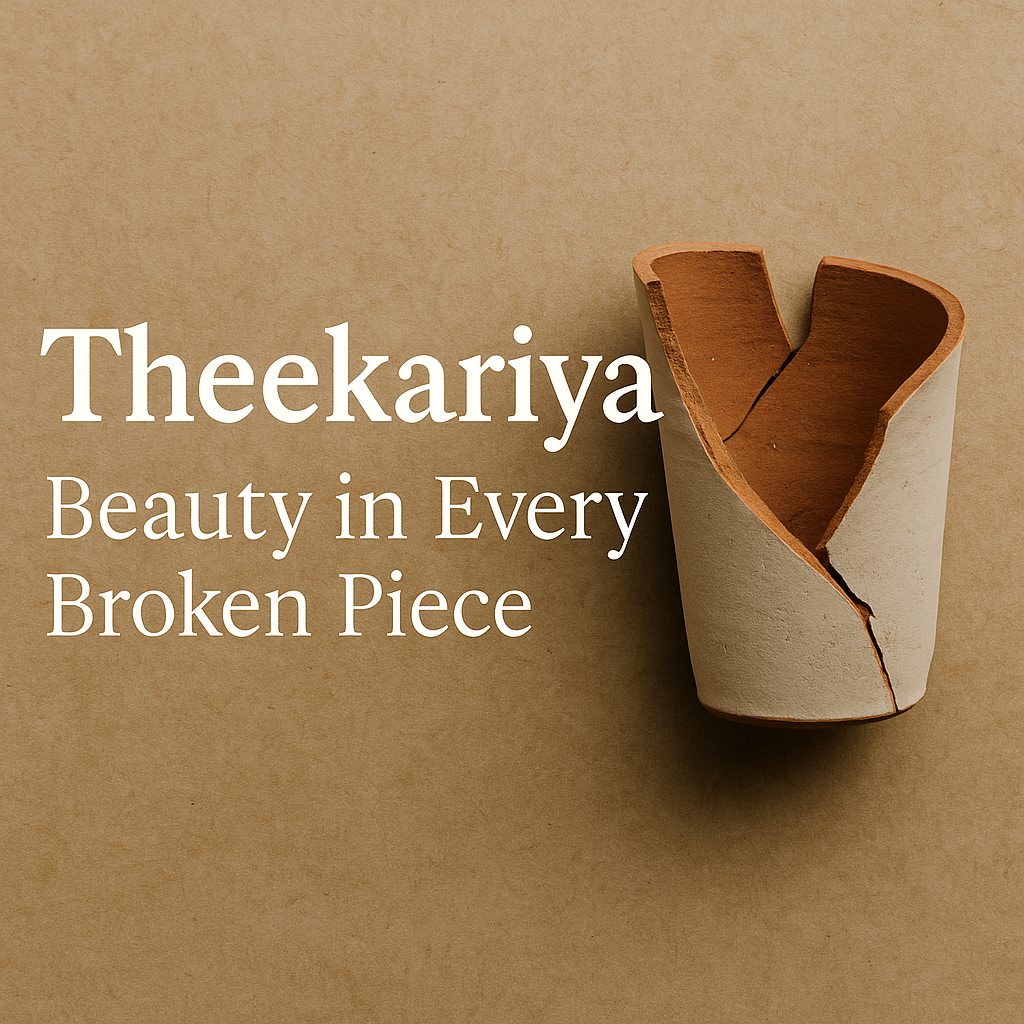

In a world obsessed with perfection, there’s something profoundly beautiful about brokenness. Theekariya — a term often used in Urdu and Hindi to describe fragments or shattered pieces, usually of glass or ceramic — holds a deeper meaning than we often realize. These tiny, jagged remnants of something once whole tell stories of the past, of what once was, and perhaps, what still could be. “Theekariya: Beauty in Every Broken Piece” is not just a poetic idea, but a powerful metaphor for life, identity, healing, and art.
The Hidden Art in Destruction
The word Theekariya may conjure images of sharp glass shards, dangerous and discarded. But pause for a moment. Look closer. These fragments often shimmer in the light, reflecting colors and shapes in ways a polished mirror cannot. They are unpredictable, each piece carrying a unique contour — no two theekariyas are ever the same. And therein lies their charm.
Just like a broken piece of pottery tells a tale of craftsmanship, use, and time, human experiences — even the painful ones — shape us. The cracks, the falls, the heartbreaks — these become our own theekariyas. And when pieced together, they form a mosaic richer than any untouched canvas.
Wabi-Sabi: Embracing Imperfection
The Japanese philosophy of Wabi-Sabi finds beauty in imperfection and impermanence. It teaches us to appreciate the natural cycle of growth, decay, and the quiet grace of things modest and humble. Theekariya perfectly aligns with this worldview. Whether it’s the broken bangles of a bride or a shattered mirror after a storm, each piece reflects a moment — unrepeatable, real, raw.
Instead of throwing away the broken, what if we embraced it? What if we collected our emotional theekariyas and turned them into something meaningful?
Kintsugi of the Soul
In Japanese art, Kintsugi is the practice of repairing broken pottery with gold — not to hide the cracks, but to highlight them. The object becomes more beautiful because of its history. This idea mirrors the way we deal with personal trauma or failure. Our scars, our regrets, our breakdowns — they are not signs of weakness, but proof of survival. Every theekariya in our life can be mended with gold if we choose to see it that way.
Our emotional and mental wounds might never fully disappear, but they can become part of a larger, more vibrant design — one that shows strength, resilience, and the journey of becoming whole again.
Theekariya in Art and Expression
Artists across the world have long found inspiration in shattered pieces. Mosaic art, for example, thrives on the beauty of fragments. From ancient Byzantine floors to contemporary installations, artists have used discarded tiles, glass, and ceramics to craft something stunning.
In South Asia, women often collect broken bangles — theekariya — to create mirror work on fabrics, ornaments, and wall art. Each piece, though individually broken, contributes to a new whole that sparkles with life. It’s a symbolic act — that from damage, something vibrant can emerge.
Similarly, poets and writers use theekariya to express pain, longing, and beauty. A broken heart, when penned with sincerity, can become a masterpiece. Think of it as emotional mosaic — every experience, joyful or sorrowful, adds depth to the story.
A Personal Reflection
Everyone carries their own theekariyas. For some, it’s a failed relationship. For others, a lost dream, a moment of shame, or an irreversible decision. But these pieces don’t have to remain scattered. Life gives us opportunities to pick them up, one by one, and build a new version of ourselves — more complex, more authentic, more human.
I once met an elderly woman who created stunning mirror art from broken glass collected over decades. When I asked why she used broken glass instead of new ones, she said, “New glass has no memories. These pieces have seen storms.” That stayed with me. Maybe that’s what Theekariya: Beauty in Every Broken Piece truly means — honoring the storms we’ve survived.
Conclusion: Finding Wholeness in Fragments
In a culture where people often hide their flaws, mask their pain, and strive for filtered perfection, theekariya reminds us that there is unmatched beauty in truth — even when it’s broken. We don’t have to throw away what’s shattered. We can repurpose it, redefine it, reframe it.
Theekariya isn’t about the end of something; it’s the beginning of transformation. Every broken piece has potential. Every fragment can find its place. And when they do, the result isn’t just beautiful — it’s breathtaking.
Theekariya: Tales from Broken Glass
Not every story is told in whole sentences. Some are whispered through silence, others through fragments — like theekariya, the broken pieces of glass that once belonged to something beautiful, now scattered but still shimmering.
Theekariya: Tales from Broken Glass is about those unspoken stories. The kind that live in the spaces between what was and what could have been. Every shard, every crack, carries a memory — a tale of love, loss, joy, or pain. Though broken, these pieces have not lost their voice. They speak through their edges, their glint, and their silence.
In our lives, we often try to hide the broken parts. We sweep them away, afraid they’ll hurt or remind us of what we’ve lost. But what if we chose to listen to them instead? What if we understood that every theekariya is not just a remnant of something shattered — but a piece of a greater, more powerful story?
Think of a mirror that once reflected a thousand faces, now lying in shards on the ground. Each piece still holds an image, a reflection, a truth. Similarly, our broken moments — heartbreaks, failures, disappointments — still carry light, lessons, and meaning.
These tales from broken glass are not just about sadness. They are about transformation. In many cultures, broken glass is repurposed into mosaic art — intricate, colorful, and meaningful. What was once discarded becomes part of something breathtaking. Our lives can be the same. We don’t have to be whole to be beautiful.
Theekariya are proof that even the broken can shine. That even when life doesn’t go as planned, something meaningful can still emerge. These stories are raw, real, and often more powerful than perfect ones.
So next time you see a broken piece of glass, don’t look away. Listen. Feel. Remember — it too was once whole. And now, it holds a new story.
Because sometimes, the most powerful tales are told not in perfection, but in pieces.
Glitter in the Ruins – It Theekariya Verse
Even ruins can sparkle. Even after the fall, something beautiful remains. Glitter in the Ruins – It Theekariya Verse is a poetic reflection on how brokenness and beauty can exist side by side — and how even in the deepest loss, there are fragments that still shine.
Theekariya, those tiny shattered pieces of glass or pottery, often symbolize destruction. But if you’ve ever noticed how they glisten under sunlight, you’ll understand — they carry a strange kind of grace. They’re not just remnants of what was lost; they’re the hidden verses of a larger story — verses written in silence, pain, and survival.
Ruins tell tales. Of what stood tall. Of what was once loved, celebrated, lived. And within those ruins, if you look closely, you’ll find theekariyas — glittering, scattered, soft-spoken. These aren't just debris; they're memory keepers. Each one holds emotion, echo, and truth.
It Theekariya Verse is the poem we write with those pieces. The kind that doesn’t rhyme but resonates. The kind that doesn’t seek perfection, only honesty. It is the voice of things left unsaid, of feelings too heavy for full sentences — captured instead in fragments, images, reflections.
We often wait for things to be whole again before we start healing, creating, or expressing. But this verse reminds us: even if everything lies in ruins, you can still write from where you are. Even if your heart feels like shattered glass, there is glitter in that grief. There is depth in that dust.
Many of the most powerful stories and art in the world are born from what broke. The mosaic is born of shards. The poem is born of pain. The strength is born of surrender.
So let your ruins be sacred. Let your pieces speak. Let your theekariya glitter, not because they’re whole, but because they dared to survive.
Glitter in the Ruins is your reminder: beauty doesn’t wait for you to be fixed. Sometimes, it’s the broken that glows the brightest.
From Cracks to Crown – The Journey of It Theekariya
Every crown has a story, and often, it begins with a crack.
From Cracks to Crown – The Journey of It Theekariya is a celebration of resilience — of rising from brokenness, gathering every shattered piece, and turning them into symbols of strength and beauty.
Theekariya — broken fragments of glass, bangles, or pottery — may seem like lifeless remnants. But in the right hands, they become art. In the right heart, they become purpose. Just like us.
Life doesn’t spare anyone from breaking. Whether through heartbreak, failure, trauma, or loss, we all collect cracks over time. But the journey of It Theekariya reminds us: those very cracks can lead us to our crown.
Think of a queen whose throne was built not in luxury, but in lessons. Each theekariya in her story represents a trial she overcame, a truth she embraced, a tear she turned into wisdom. Her crown didn’t come from perfection — it came from the courage to rebuild.
This journey isn’t about hiding the brokenness. It’s about wearing it with pride. Just like Kintsugi — the Japanese art of repairing broken pottery with gold — It Theekariya teaches us to highlight our scars, not conceal them. Because those cracks are proof: we fell, but we rose again.
"From Cracks to Crown" is not just metaphor. It’s a mindset. It’s the shift from seeing yourself as damaged to seeing yourself as designed by experience. It’s the moment you stop surviving and start reigning — over your past, your pain, and your power.
Each fragment in your story matters. Every mistake, every heartbreak, every breakdown — it shaped you. You didn’t just make it through; you turned your theekariyas into jewels.
So lift your head. Place your crown. Not despite your cracks — but because of them.
Your journey is royal.
Theekariya: Shattered Echoes of Silence
Theekariya — broken shards, fragments of glass or pottery — are often seen as waste. But beneath their shattered edges lies a quiet story. Theekariya: Shattered Echoes of Silence is more than just a poetic phrase. It’s a reflection of human emotion — the moments we break, fall silent, and yet somehow still shine.
Each shard, though broken, holds the memory of what it once was. A bangle that once danced on a joyful hand, a mirror that once showed a smiling face, or a vase that once held fresh flowers — now lie broken, forgotten. But if you listen closely, they echo something deeper: a silence that speaks of love lost, time passed, and emotions that couldn’t find words.
Just like these broken pieces, we too experience moments where life feels shattered. Whether it’s heartbreak, failure, loss, or disappointment — those are our theekariyas. And in those silent moments, we often find our truest selves. Not in the noise of the world, but in the stillness of our soul.
There is beauty in this brokenness. Much like mosaic art created from scattered glass, our pain and silence can come together to form something beautiful. These theekariyas reflect resilience — the quiet strength it takes to keep going after breaking. The silent screams that shape us. The unspoken emotions that teach us more than words ever could.
“Theekariya: Shattered Echoes of Silence” reminds us that not all silence is empty. Sometimes, it carries the weight of everything we couldn’t say. And those shattered pieces? They are not a sign of weakness, but symbols of a story still unfolding.
So, gather your fragments. Listen to their quiet echo. There is wisdom in your wounds, and strength in your silence. Like theekariya catching light, you too can reflect beauty — even in pieces.
The Last Sparkle – It Theekariya Chronicles
There comes a moment in every life when something breaks — a dream, a bond, a belief. What’s left behind are fragments, often unnoticed, lying silent and still. In the world of metaphors, these fragments are theekariya — broken pieces of something once whole. The Last Sparkle – It Theekariya Chronicles tells the story of these pieces: not just the broken, but what still glows within them.
The last sparkle is not about endings; it’s about the final light that refuses to fade. Even the smallest shard of glass catches the sun if it lies at the right angle. Just like that, even in the most broken moments of our lives, there remains a trace of hope, beauty, or wisdom — the final flicker that tells us we are not entirely lost.
Every theekariya in these chronicles holds a story — of love that didn't last but taught something eternal, of ambitions that cracked under pressure yet revealed a hidden strength, of friendships that shattered but left a memory that still warms the heart. These are not tales of tragedy. They are testaments to resilience.
In South Asian culture, especially in traditional crafts, theekariya are sometimes reused — to decorate fabrics, design mirror work, or even craft new art. It’s a quiet nod to the belief that broken doesn’t mean useless. It means transformation.
"The Last Sparkle" is about those final, unnoticed glimmers — the smile behind tears, the lesson in the loss, the courage in letting go. We often wait for grand moments to define life, but sometimes, it’s the tiniest spark in the darkest hour that changes everything.
These chronicles are for the silent hearts — those who’ve broken, bled, but never stopped shining. Even in pieces, even on the floor, your story holds meaning.
So, gather your theekariyas. Don’t hide them. Frame them like mosaics of survival. Let their sparkle tell your story. Because sometimes, the last sparkle… is the one that saves you.
Shining Through Cracks – The It Theekariya Diaries
Some lights don’t come from the sun or the stars — they shine through cracks. Shining Through Cracks – The It Theekariya Diaries is a tribute to the kind of beauty that comes not from being flawless, but from being broken... and still glowing.
In Urdu and Hindi, theekariya refers to shards — broken pieces of glass, pottery, or bangles. At first glance, they may seem like waste. But look again, and you’ll see they catch the light in ways no perfect surface can. Each edge, each curve, each reflection tells a story — a piece of a diary written not in ink, but in scars and silence.
This is what The It Theekariya Diaries are made of: stories of those who have cracked under pressure, shattered in moments of heartbreak, and fallen apart in silence — yet found a way to shine through. These aren't fairy tales. They're real-life pages, filled with struggle, healing, resilience, and quiet triumphs.
We often think strength means holding ourselves together, never breaking, always smiling. But true strength lies in what happens after the fall — in how we gather our theekariyas and create something new from the damage. A stronger version. A braver soul. A more compassionate heart.
Across cultures, broken pieces are used to create art — mosaic floors, mirror embroidery, glass paintings. These art forms embrace imperfection. They don't hide the cracks — they highlight them. Just like that, your emotional cracks are not weaknesses. They are entry points for light.
Shining Through Cracks is about celebrating those hidden lights. The ones that shine in the darkness of grief, in the silence of solitude, in the depth of brokenness. It’s about those moments when you thought it was over — but you rose anyway.
Each entry in the Theekariya Diaries whispers: “You are not alone. You are not broken beyond repair. You are a masterpiece in progress.”
So let your cracks show. Let your light through. You don’t need to be whole to be worthy. Sometimes, it's the shattered pieces that sparkle the most.
Theekariya: Beauty in Fragments
Not all beauty is smooth, polished, or whole. Sometimes, it’s hidden in the broken — in the jagged edges and scattered pieces we call theekariya. These fragments, though shattered, carry a unique kind of grace. Theekariya: Beauty in Fragments explores the powerful idea that there is light, meaning, and even art in what we often discard.
A bangle breaks. A mirror falls. A vase slips from someone’s hands. And what’s left behind? Pieces. Sharp, irregular, imperfect. Yet each theekariya reflects something — a flash of color, a glint of sunlight, a memory of what once was. In every broken piece lies a trace of the original beauty, along with the story of how it broke.
We, too, are made of such fragments.
Life doesn’t always leave us whole. We crack under pressure, fall apart after heartbreaks, and collect scars along the way. But just like those scattered pieces of glass, our broken parts hold value. They tell the story of survival, strength, and silent healing. There’s beauty in how we piece ourselves back together — not to be perfect again, but to become something more real, more layered, more human.
In art, fragments are often reused — in mosaics, stained glass, and mirror work. Pieces that were once discarded come together to form something new, something stunning. That’s the lesson theekariya teaches us. Even the broken has purpose. Even the incomplete can be beautiful.
Theekariya: Beauty in Fragments is a reminder to see value where others see waste. To honor our own journey, with all its highs and lows. To stop hiding our scars, and instead, embrace them as proof of our growth.
You are not less because you're cracked. You are more because you’ve lived, you’ve felt, and you’ve risen again.
So collect your fragments. Hold them in your hands without shame. And when the light hits just right — you’ll see, you’re still glowing.
The Dust of Dreams – It Theekariya Reflections
Dreams don’t always break with a sound. Sometimes, they dissolve slowly — like dust collecting in quiet corners of the heart. The Dust of Dreams – It Theekariya Reflections is a gentle meditation on the fragility of hopes and the beauty found in their remains.
Theekariya — the tiny broken pieces of glass or pottery — often seem like lifeless debris. But look closer, and you’ll find a shimmer, a story, a past. These fragments were once part of something beautiful — something whole. Much like our dreams.
We dream with open hearts — of love, success, connection, peace. But life isn’t always kind to our wishes. Some dreams fade quietly, never getting the chance to bloom. Others break suddenly, leaving behind emotional theekariyas — sharp, painful reminders of what could have been.
But in that dust, in those scattered pieces, lies something sacred: reflection.
Every broken dream teaches us something. Every theekariya glints with wisdom — about who we are, what we long for, and how deeply we feel. Even in loss, there is learning. Even in silence, there is growth.
The Dust of Dreams isn’t a story of despair. It’s a story of rediscovery. Just as artists use broken mirror pieces to create shimmering designs, we too can gather our emotional fragments to shape new visions — wiser, braver, and more grounded.
Some of the most beautiful reflections come from cracked mirrors. Not despite the breaks — but because of them. They show us ourselves in unexpected ways, revealing strength we didn’t know we had, and softness we thought we’d lost.
So don’t brush away the dust too quickly. Sit with it. Let the theekariyas of old dreams speak. Let them reflect your journey — not as a failure, but as a mosaic in progress.
You may not be who you once dreamed of becoming. But maybe, just maybe, you're becoming something even more meaningful.
When It Breaks, It Speaks – The It Theekariya Truth
Some truths remain hidden until something breaks. A bangle, a heart, a moment — all hold silence until the fall. When It Breaks, It Speaks – The It Theekariya Truth is not just about broken glass, but about the quiet honesty that only emerges after the shatter.
Theekariya — the delicate fragments left behind after something once whole has cracked — are often swept away without thought. But within each piece lies a deeper message, a truth that couldn't be spoken when everything looked perfect. These shards don’t just reflect light; they reflect emotion, memory, and truth.
We live in a world that praises strength, perfection, and control. We’re taught to hide our wounds, to silence our pain, to smile even when we’re breaking. But truth doesn’t live in perfection. It lives in the cracks — the places where we let our guard down, where we fall apart, where we finally feel.
It’s in the quiet tears after a loud goodbye. In the empty space left by a dream that didn’t survive. In the silence between two people who once shared everything. That’s where the theekariya truth begins to speak.
This truth isn’t always soft — sometimes it’s sharp, like the glass that cuts when touched carelessly. But if you hold it gently, if you listen, it can teach you things wholeness never could. Things about your strength. Your needs. Your capacity to rebuild.
Artists use broken pieces to create mosaics — imperfect, yet beautiful and whole in a different way. So can we. Our truth, spoken through theekariyas, becomes the foundation of something new: more real, more raw, more ours.
“When It Breaks, It Speaks” is a reminder that your cracks are not your shame — they’re your story. And sometimes, the most honest part of us only finds its voice when the silence is shattered.
So don’t be afraid of what breaks. Listen to what it tells you. Because some truths are too real to stay whole.
Theekariya: Pieces of a Forgotten Soul
Some stories don’t fade — they fall apart. Slowly, silently, piece by piece, until all that’s left is a collection of fragments scattered in time. Theekariya: Pieces of a Forgotten Soul is the story of those silent remnants — the emotions, memories, and dreams that once defined us, now lying broken, waiting to be remembered.
Theekariya, the shards of glass or pottery, are more than just physical objects. They are symbols — of things once whole, now lost or overlooked. Much like the pieces of ourselves we leave behind when life changes us, wounds us, or moves on too quickly.
Have you ever felt like parts of you no longer exist? The child who once dreamed without fear? The lover who once gave their heart fully? The artist who once painted their soul into colors? Those versions of you didn’t vanish — they became theekariyas, quietly resting in the corners of your spirit.
These pieces don’t scream for attention. They whisper. In a song that takes you back. In a scent that stirs a memory. In a moment of silence that suddenly feels like home. And when we pause long enough to notice them, they remind us who we were… and who we still are beneath the noise.
Theekariya: Pieces of a Forgotten Soul is a reflection on remembering — not to mourn what’s lost, but to gather it with care. Each shard holds a story, a lesson, a feeling that once mattered deeply. And even if the whole can’t be restored, the pieces can still create something meaningful.
Think of mosaic art — how shattered glass is transformed into breathtaking beauty. Your soul works the same way. No matter how forgotten or broken, your pieces still shine. They still belong to you.
This is a call to look inward. To revisit the forgotten parts of your soul with love. To gather your theekariyas — not to fix what broke, but to honor what lived.
Because in the end, you are not just what you’ve become. You are also everything you’ve once been — in pieces, in light, in silence.