

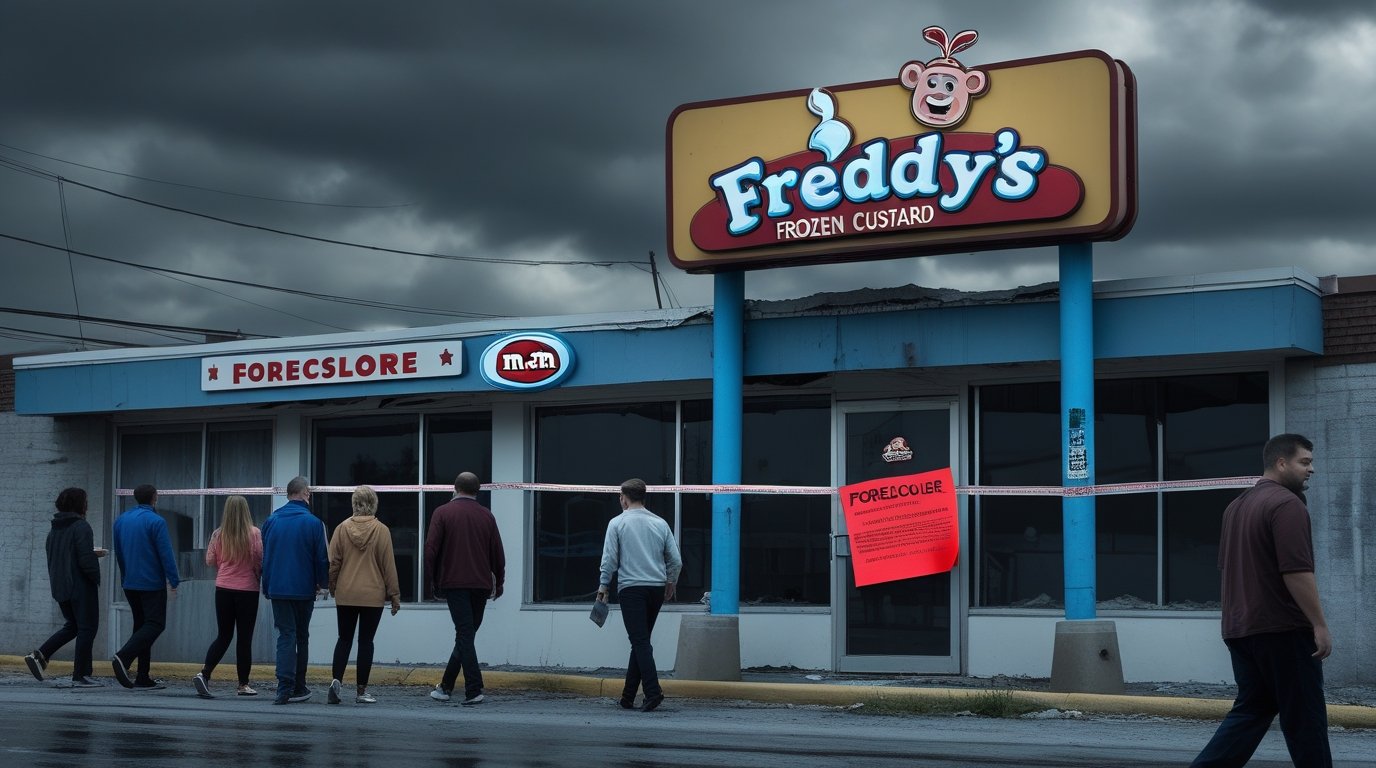

Freddy’s Frozen Custard Franchisee M&M Custard Filed for Bankruptcy & Steakburgers has become a household name in the fast-food industry, thanks to its delicious frozen custard and mouth-watering steakburgers. Over the years, the brand has expanded rapidly through franchising, offering entrepreneurs an opportunity to join a fast-growing business with strong brand recognition. However, not all franchisees have been able to replicate the brand’s success. This article takes an in-depth look at the circumstances that led to the bankruptcy of M&M Custard, the broader implications for the Freddy’s franchise, and the lessons that aspiring franchisees can learn from this case.
The Freddy’s Frozen Custard Franchisee M&M Custard Filed for Bankruptcy Franchise Model: A Success Story
Founded in 2002 by Bill and Randy Simon, Freddy’s Frozen Custard Franchisee M&M Custard Filed for Bankruptcy & Steakburgers quickly carved out a niche in the fast-casual dining sector. Known for its fresh, high-quality frozen custard, juicy steakburgers, and retro-inspired atmosphere, Freddy’s gained a loyal following, which led to the company’s expansion via franchising. As of now, Freddy’s boasts hundreds of locations across the United States, with more planned for the future.
The franchise model that Freddy’s employs has been instrumental to its growth. The company offers franchisees a chance to invest in a proven concept, backed by comprehensive training, marketing support, and a recognized brand. For many entrepreneurs, opening a Freddy’s franchise seemed like a reliable way to enter the competitive world of fast food, with the promise of leveraging the success and reputation of an established brand.
Why Franchisees Choose Freddy’s
Freddy’s success can be attributed to several factors. The chain provides an appealing product that combines the nostalgia of old-fashioned American fast food with modern fast-casual dining trends. Additionally, Freddy’s franchisees benefit from an established supply chain, support with site selection, and a turnkey marketing plan designed to build local awareness. For entrepreneurs, these benefits can make opening a Freddy’s location seem like a no-brainer.
However, despite these advantages, the path to success for franchisees is not always smooth, as illustrated by the unfortunate story of M&M Custard.
The M&M Custard Bankruptcy: What Went Wrong?
M&M Custard was a franchisee of Freddy’s Frozen Custard Franchisee M&M Custard Filed for Bankruptcy, operating one or more locations under the Freddy’s brand. However, the company encountered several significant challenges that ultimately led to its bankruptcy filing.
Financial Struggles and High Overhead Costs
Like most franchise systems, Freddy’s requires franchisees to pay ongoing fees, including royalty payments, marketing contributions, and a share of the cost of goods sold. While these fees are part of the business model, they can create substantial financial pressure for franchisees, especially those who may not have the economies of scale or customer base to cover these costs effectively.
Franchisees like M&M Custard face the burden of these costs while trying to maintain profitability. High operating expenses combined with challenges in scaling revenue can result in financial distress.
Operational Challenges and Lack of Support
Another critical factor that played into the bankruptcy filing was operational inefficiency. Running a Freddy’s location involves adhering to a set of operational standards designed to ensure consistency and quality across all locations. For some franchisees, implementing these procedures can be challenging, particularly when managing staff, inventory, and the day-to-day logistics of running a fast-food operation.
Moreover, franchisees often rely on support from the franchisor to help address operational hurdles. However, in the case of M&M Custard, it seems that there may have been a lack of timely and effective support from the parent company. Whether due to communication breakdowns or insufficient assistance from Freddy’s corporate team, M&M Custard may have struggled to overcome operational obstacles, contributing to its eventual bankruptcy filing.
Increased Competition in the Fast-Casual Dining Sector
The fast-food industry is one of the most competitive sectors, with new brands constantly emerging and established players fighting for market share. Freddy’s, while successful, is not immune to competition. As the frozen custard segment grew, M&M Custard found itself competing against a variety of national and regional brands offering similar products.
Consumers’ increasing preference for healthier and more sustainable options also put pressure on traditional fast-food chains like Freddy’s to adapt. While Freddy’s did attempt to diversify its menu, franchisees like M&M Custard may have found it difficult to keep up with changing consumer demands while also addressing the competition. This growing competition made it more difficult to stand out in the marketplace and achieve the level of revenue necessary to stay profitable.
Changing Consumer Preferences and Market Demands
In recent years, consumer preferences have shifted toward healthier dining options, with many customers now seeking lighter, more sustainable food choices. While Freddy’s made efforts to update its menu to reflect these preferences, some franchisees, including M&M Custard, may have struggled to adapt their offerings to meet the changing tastes of consumers.
The Impact of M&M Custard’s Bankruptcy on Freddy’s Frozen Custard Franchisee M&M Custard Filed for Bankruptcy
The bankruptcy of M&M Custard, while unfortunate for the franchisee, has significant implications for Freddy’s Frozen Custard Franchisee M&M Custard Filed for Bankruptcy as a brand. The foundation of franchise systems is the belief that, with the parent company’s direction, individual locations will prosper. Even if the brand is successful overall, the failure of a franchisee damages the brand’s reputation and may give the impression that it is unstable.
Brand Reputation and Trustworthiness
Freddy’s has put a lot of effort into establishing a reputation as a high-quality, family-friendly brand. However, the bankruptcy of a franchisee such as M&M Custard may cause prospective investors or consumers to question the brand’s stability and dependability. The reputation of a brand is greatly influenced by its franchisees, and a public bankruptcy filing can erode consumer confidence.
Lessons for Other Franchisees
For other Freddy’s franchisees, the M&M Custard case serves as a warning. It emphasizes how crucial it is to control expenses, keep lines of communication open with the franchisor, and adjust to changes in the market. Franchisees need to be proactive in resolving operational and financial issues, ask for help from the franchisor when needed, and maintain flexibility in response to changing customer demands.
Before making the investment, franchisees should also carefully consider their capacity to run a Freddy’s location. Both being able to adjust to the difficulties of operating a fast-food restaurant and comprehending the nuances of the franchise system are essential for franchisee success. M&M Custard’s experience serves as a reminder of how crucial it is to carefully assess the operational and financial requirements of the company before committing.
What Does This Mean for Potential Freddy’s Franchisees?
For those considering investing in a Freddy’s Frozen Custard Franchisee M&M Custard Filed for Bankruptcy franchise, the bankruptcy of M&M Custard is a reminder of the potential risks involved in franchising.
Steps to Ensure Franchise Success
Doing extensive due diligence is essential if you’re considering becoming a Freddy’s franchisee. This entails being aware of the franchise’s financial components, such as the upfront investment, royalties, and other recurring expenses. It is also crucial to carefully read the franchise disclosure document (FDD) and consult legal and business consultants.
Successful franchisees must also continue to interact with their franchisor and utilize the resources and assistance offered. Franchisees can guarantee they have access to the resources and direction required to thrive in a cutthroat market by keeping a close relationship with the corporate team.
Conclusion
The bankruptcy of M&M Custard, a Freddy’s Frozen Custard Franchisee M&M Custard Filed for Bankruptcy franchisee, serves as a stark reminder that franchising, while potentially lucrative, comes with its own set of challenges. For aspiring franchisees, the case of M&M Custard underscores the importance of carefully evaluating the franchise model, maintaining strong relationships with the franchisor, and being prepared to manage both the financial and operational aspects of running a business.
FAQs
What led to M&M Custard’s bankruptcy?
M&M Custard’s bankruptcy was caused by a combination of financial difficulties, high operating costs, market competition, and operational inefficiencies.
How did M&M Custard’s bankruptcy affect Freddy’s Frozen Custard Franchisee M&M Custard Filed for Bankruptcy?
M&M Custard’s bankruptcy raised concerns about the stability of the Freddy’s franchise system, potentially affecting the brand’s reputation and trustworthiness.