

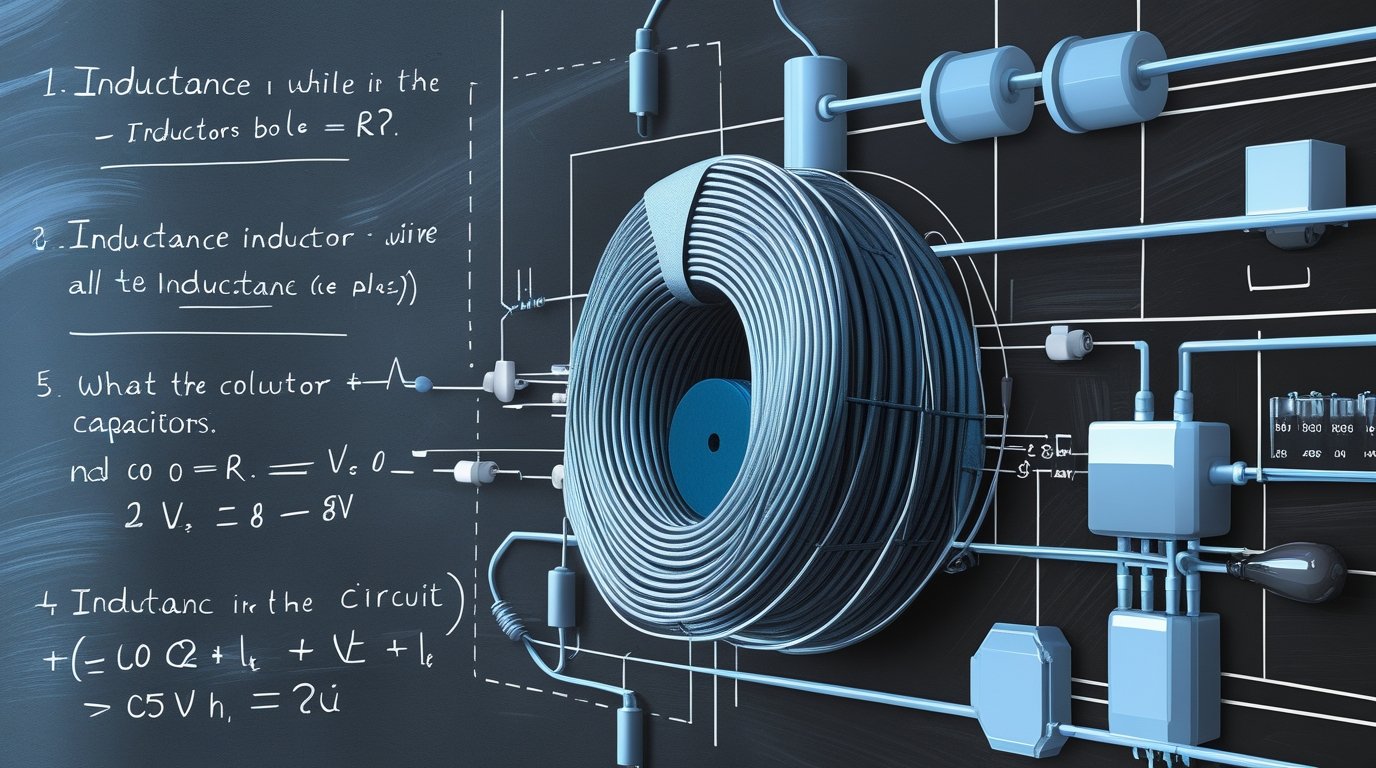

Inductance is a fundamental property in electrical circuits, and understanding how it works is crucial for anyone involved in electronics, electrical engineering, or related fields. When discussing inductance, the term “AM.I.A.K4 Inductance in a Circuit. Oral Questions” may arise in academic discussions, tests, and practical applications. In this article, we will dive deep into what AM.I.A.K4 Inductance in a Circuit. Oral Questions is, its significance, and some common oral questions that could come up in discussions or exams. Whether you’re a student, professional, or hobbyist, this guide will provide a comprehensive understanding of inductance, making it easier to grasp complex concepts and prepare for exams.
What is Inductance in a Circuit?
Before we delve into AM.I.A.K4 Inductance in a Circuit. Oral Questions, it’s important to have a solid understanding of what inductance is. Inductance is a property of an electrical circuit or component, usually a coil or inductor, that resists changes in the current flowing through it. This resistance to changes in current is due to the magnetic field generated by the current itself. When the current through an inductor changes, it induces an electromotive force (EMF) that opposes this change. This is described by Lenz’s Law, which states that the direction of the induced current will always oppose the change in the original current.
Inductance is measured in henrys (H), and the amount of inductance depends on factors such as the number of turns in the coil, the core material, and the coil’s geometry. Inductors are commonly used in various applications, including filters, transformers, and inductive load circuits.
Why is Inductance Important?
Inductance is crucial in many types of circuits because it affects the behavior of alternating current (AC) signals. In AC circuits, inductance can cause phase shifts between current and voltage, and this phase difference is significant when designing and analyzing circuits. Inductors are widely used in power supplies, oscillators, radio transmitters, and other systems that rely on the manipulation of electrical signals.
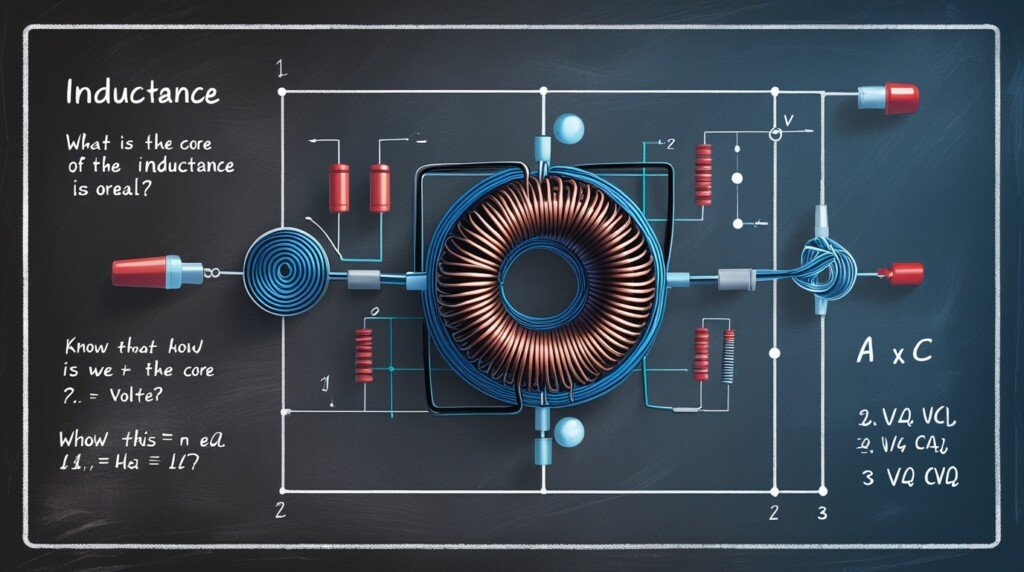
AM.I.A.K4 Inductance in a Circuit. Oral Questions
The term “AM.I.A.K4 Inductance in a Circuit. Oral Questions” might be unfamiliar to some, but it refers to a specific type of inductance in certain circuits, possibly a standard or reference used in certain exams or practical systems. Let’s break down what this could refer to and its significance in electrical circuits.
“AM.I.A.K4” could be an abbreviation or reference to a certain model, standard, or theoretical context used in the study of inductance. In the context of inductance, “K4” could refer to a specific configuration or parameter that affects the behavior of the inductor or the circuit in which it’s embedded. For example, it could indicate a particular formula, type of inductor winding, or even a characteristic of the coil material. However, the specific details of “AM.I.A.K4” are not universally defined and could vary depending on the course, study material, or context in which it’s being used.
Understanding AM.I.A.K4 in Context
While the exact meaning of AM.I.A.K4 Inductance in a Circuit. Oral Questions might not be immediately clear without specific context, it’s likely related to the role inductance plays in certain configurations of electrical circuits. For instance, in some educational settings, AM.I.A.K4 could be a way of referencing a specific test case or setup used to demonstrate inductive properties.
One way to understand the significance of AM.I.A.K4 Inductance in a Circuit. Oral Questions is to explore how inductors behave in different circuit configurations, such as in series or parallel arrangements. The total inductance in a series circuit is the sum of individual inductances, while in a parallel arrangement, the total inductance can be calculated using a reciprocal formula, similar to resistors in parallel.
Applications of AM.I.A.K4 Inductance in a Circuit. Oral Questions
Inductance, including AM.I.A.K4 Inductance in a Circuit. Oral Questions, is useful in a variety of applications:
- Power Filters: Inductance helps smooth out fluctuations in power supplies, ensuring stable voltage levels for sensitive electronics.
- Radio Frequency (RF) Circuits: Inductance is crucial in RF circuits for tuning and signal filtering.
- Transformers: Transformers rely on the principle of inductance to step up or step down voltage in AC circuits.
Oral Questions on Inductance
If you’re preparing for oral exams or practical interviews related to inductance, it’s important to be ready for questions that test both your theoretical knowledge and your practical understanding of how inductance works in circuits. Below are some common oral questions you might encounter:
1. What is Inductance and How Does it Work?
This is a fundamental question that tests your basic understanding of inductance. A clear, concise answer should cover:
- The definition of inductance.
- How inductance resists changes in current.
- The role of magnetic fields in inducing voltage.
2. Explain the Difference Between Inductance in Series and Parallel Circuits.
This question evaluates your understanding of how inductance behaves in different configurations. You should explain:
- How inductance in series adds up (L_total = L1 + L2 + …).
- How inductance in parallel behaves similarly to resistors in parallel (1/L_total = 1/L1 + 1/L2 + …).
3. What is Lenz’s Law and How Does it Relate to Inductance?
Lenz’s Law is a fundamental principle in electromagnetism that is crucial for understanding inductance. Your answer should include:
- The law’s definition: The induced EMF will oppose the change in the current.
- How this law explains the behavior of inductors in resisting current changes.
4. Can You Explain the Concept of Self-Inductance?
Self-inductance refers to the phenomenon where a changing current in a coil induces a voltage (EMF) that opposes the change in the current. A strong answer would discuss:
- The equation for self-inductance: VL=−LdIdtV_L = -L \frac{dI}{dt}VL=−LdtdI.
- Real-world examples of self-inductance, such as in power supplies or transformers.
5. What is Mutual Inductance and How is it Different from Self-Inductance?
This question tests your understanding of the relationship between two inductors. A complete answer should include:
- The concept of mutual induction.
- The differences between mutual and self-inductance, with examples like transformers.
6. How Does Inductance Affect the Phase Relationship Between Current and Voltage in an AC Circuit?
This question focuses on the behavior of inductance in AC circuits. Your answer should address:
- How inductance causes a phase shift between voltage and current (current lags voltage by 90 degrees).
- The implications of this phase shift in AC power systems.
7. How Do You Calculate the Total Inductance in a Circuit?
This is a practical question that requires you to demonstrate your ability to apply formulas. Be prepared to explain:
- How to calculate total inductance in series and parallel circuits.
- The mathematical formulas used in each configuration.
8. Explain the Concept of Inductive Reactance.
Inductive reactance is the opposition to AC current due to inductance. You should explain:
- The formula for inductive reactance: XL=2πfLX_L = 2\pi f LXL=2πfL, where f is the frequency and L is the inductance.
- How inductive reactance increases with frequency.
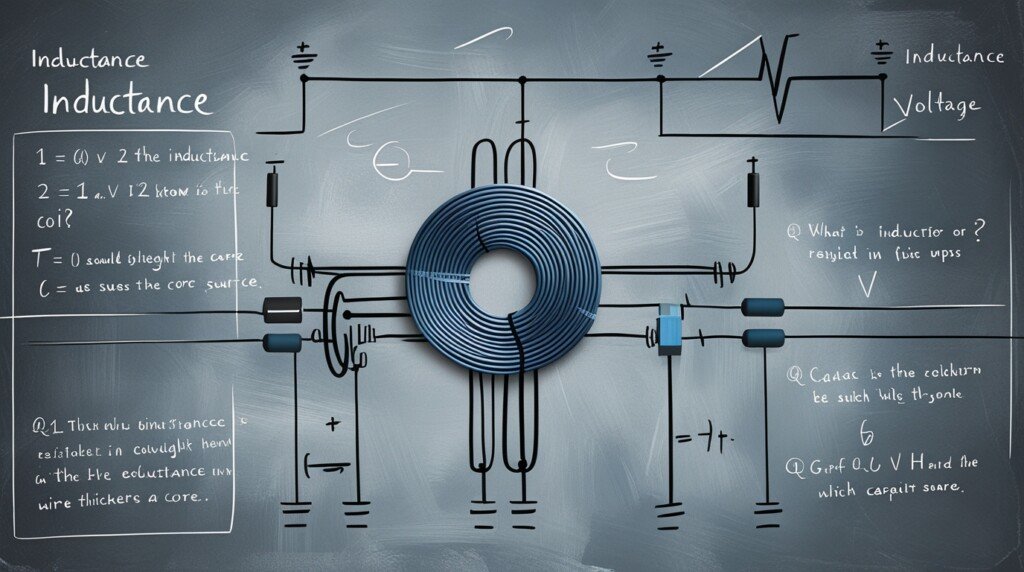
Key Concepts to Remember
When preparing for oral exams or practical applications related to AM.I.A.K4 Inductance in a Circuit. Oral Questions, keep in mind the following key concepts:
- Self-Inductance: The ability of an inductor to resist changes in its own current.
- Mutual Inductance: The ability of one coil to induce a current in a nearby coil.
- Inductive Reactance: The resistance offered by an inductor to alternating current.
- Lenz’s Law: The principle that the induced EMF opposes the change in the current.
Conclusion
AM.I.A.K4 Inductance in a Circuit. Oral Questions is a fascinating and essential concept in electrical engineering and electronics. Whether you’re studying for exams or applying this knowledge in practical scenarios, understanding how inductance works and its applications in real-world circuits is crucial. By mastering the fundamental concepts such as self-inductance, mutual inductance, and inductive reactance, you can confidently answer oral questions and perform well in any theoretical or practical assessment related to inductance. The significance of inductance stretches beyond just academic exercises—it plays a crucial role in power systems, electronics, and a wide range of technologies.
FAQs
1. What is the formula for calculating inductance in series circuits?
In series circuits, total inductance is the sum of individual inductances:
Ltotal=L1+L2+⋯+LnL_{\text{total}} = L_1 + L_2 + \dots + L_nLtotal=L1+L2+⋯+Ln.
2. How does inductance affect the current in an AC circuit?
Inductance causes the current to lag the voltage by 90 degrees, creating a phase shift in AC circuits.
3. What is inductive reactance?
Inductive reactance is the opposition offered by an inductor to the flow of alternating current and is given by the formula XL=2πfLX_L = 2\pi f LXL=2πfL.